
What Home Remedies Help With Heartburn?
Good to know
These home remedies are for occasional, mild heartburn. Frequent or severe heartburn can be a sign of reflux disease and should be assessed by a doctor. The information below is for information only.
In short: One too many glasses of wine, a stressful day or too rich a meal — there are many causes of heartburn. Alongside medicines, simple home remedies can help relieve the burning sensation: soothing teas, chewing gum, oatmeal, healing clay, the right sleeping position and a few preventive habits. Here's what can help against acute heartburn.
In this article
Home remedies for drinking: from milk to potato juice
From the tried-and-tested classic to the unusual-looking home remedy — anyone suffering from heartburn is spoilt for choice. Sufferers can resort to the following home remedies for drinking, among others:
- baking soda
- water and herbal teas
- milk
- healing clay
- sauerkraut and potato juice
| Remedy | Effect | Notes / warnings | Pregnancy / children |
|---|---|---|---|
| Baking soda | Neutralises stomach acid | Risk of overdosing, belching; consult a doctor if pregnant | Limited use |
| Water & herbal teas | Dilutes acid, soothes stomach | Black tea limited due to caffeine | Safe |
| Milk | Cooling placebo effect | Not scientifically proven | Moderate use |
| Healing clay | Absorbs excess stomach acid | Avoid with medications; caution with high aluminium content | Generally safe; avoid high Al |
| Sauerkraut & potato juice | Regulate pH, buffer acid | Sauerkraut can cause flatulence | Safe |
Baking soda: does the classic home remedy help against heartburn?
Good old sodium bicarbonate is the first thing many people reach for — dissolve a teaspoon in a large glass of still water and drink it slowly in small sips. It does neutralise stomach acid, but shouldn't be used too often: excess sodium bicarbonate can upset the body's pH balance, and the carbon dioxide it produces can cause belching that puts extra pressure on the sphincter between the stomach and oesophagus. During pregnancy and breastfeeding, ask your doctor before using it.
For the full breakdown of how it works — and why it can backfire — see heartburn myths: milk, baking soda and more.
Dilute stomach acid with water and herbal teas
A proven home remedy for heartburn is drinking herbal teas. Heartburn occurs when acidic stomach contents enter the oesophagus and attack the sensitive mucous membrane.
In some cases, drinking something brings relief by moving the acid back into the stomach. It also dilutes the excess stomach acid.
A glass of lukewarm, still water or low-acid tea such as chamomile or fennel tea is considered suitable. Black tea is only suitable to a limited extent, as its caffeine can weaken the muscle between the stomach and the oesophagus.
Which tea helps with oesophagitis?
Inflammation of the oesophageal mucosa (oesophagitis) is often triggered by persistent reflux. Treatment is usually conservative — one possible support is drinking certain teas, for example with calamus root, yarrow and chamomile. Alkaline powders or healing clay are also said to help.
Drinking milk against heartburn — (not) a suitable home remedy?
Besides bicarbonate of soda, milk is often cited as a home remedy for heartburn, but its effect is controversial. Science currently tends to conclude that a glass of cold milk does not help with heartburn.
So why do so many people swear by it? Possibly a placebo effect: the cooling sensation in the oesophagus and the belief that milk has proven its worth can provide relaxation and calm the stomach. (More on this in heartburn myths.)
Help from the ice age: healing clay for heartburn
Healing clay is a fine rock powder extracted from glacial loess deposits and used for various applications — including mild heartburn and acid-related stomach pain. Like a sponge, it absorbs excess stomach acid.
You can get healing clay at the pharmacy. It is dissolved in a glass of water or tea according to the package instructions and drunk in sips. There are no known side effects. However, it should not be taken at the same time as other medicines, as active substances can be partly neutralised — an interval of one hour is recommended.
Healing clay — also for pregnant women?
So far there are no restrictions on use during pregnancy and breastfeeding. However, expectant and breastfeeding mothers should avoid healing clay with a high aluminium content: at increased concentrations, aluminium can pass to the (unborn) child, and developmental disorders of the brain or damage to the kidneys, liver or bones are possible.
Sauerkraut and potato juice help with mild heartburn
These home remedies may seem a little unusual: sauerkraut and potato juice are also said to help against the burning sensation behind the breastbone. Sauerkraut regulates the pH value in the stomach and can ease mild discomfort; eating sauerkraut can also help, though too much can lead to flatulence.
Potato juice acts as an alkaline buffer, preventing over-acidification of the body. The juice from raw potatoes also neutralises excess acid. There are no known side effects, which is why this remedy is also suitable for pregnant women.
Home remedies for eating: chewing gum, oatmeal and co.
Remedies for heartburn and reflux are not only available for drinking, but also for eating. The tips below are generally safe to use during pregnancy and breastfeeding.
- chewing gum
- almonds and nuts
- oatmeal
- linseed
- mustard
| Remedy | Effect | Notes / warnings | Pregnancy / children |
|---|---|---|---|
| Chewing gum | Stimulates saliva, neutralises acid | Sugar content may affect teeth | Safe |
| Almonds / nuts | Chew to bind acid | Avoid peanuts; not suitable if you have a tree nut or peanut allergy | Safe unless allergic |
| Oatmeal | Binds excess stomach acid | Cook with water; cinnamon/honey optional | Safe |
| Linseed / flax | Protective mucilage layer for stomach & intestines | Drink plenty of fluids | Safe; consult before 34th week |
| Mustard | May bind acid, anti-inflammatory | Spicy mustard can worsen symptoms | Test carefully |
Chewing gum as a remedy for heartburn
A rather unusual home remedy for heartburn is chewing gum, because it stimulates the production of saliva. Saliva is slightly alkaline and can neutralise small amounts of stomach acid in the oesophagus. It also dilutes the existing acid and carries it back towards the stomach when swallowing.
Good to know
If you don't like chewing gum, you can use sweets or pastilles — they also stimulate saliva production. Use them only in moderation, though, as they often contain a lot of sugar, which can promote tooth decay.
Neutralise stomach acid with almonds and nuts
To relieve mild heartburn, chew about 4 to 6 almonds, a few hazelnuts, cashews or sunflower seeds very finely. This creates a liquid paste that can bind excess stomach acid. Be cautious with peanuts, though, as they can even stimulate the formation of acid.
Skip this remedy entirely if you have a tree nut or peanut allergy — choose one of the other options instead, such as oatmeal or herbal tea.
Soothe heartburn with oatmeal
Chewing oatmeal creates a porridge that can bind excess stomach acid. Alternatively, you can cook oatmeal or porridge and eat it.
For the basic recipe (1 serving) you need:
- about 40–50 g of oatmeal
- 200 ml of liquid, preferably water
Mix the two in a saucepan and cook for about 3 minutes. You can then refine the dish with cinnamon, honey or almonds.
Linseed (flax) — effective home remedy and superfood
If you eat flaxseed regularly, you do something good for both your stomach and your intestines. Linseed contains a large amount of mucilage, which acts like a protective layer on the mucous membranes of the oesophagus, stomach and intestines, protecting them from aggressive stomach acid. Psyllium has a similar effect.
Note for pregnant women
As linseed has a birth-supporting effect, it is often recommended from the 34th week of pregnancy — taken regularly, it is said to promote labour and shorten the birth process. If used before then, it is advisable to consult your gynaecologist.
Flax seeds are best taken ground: as a topping in muesli or yoghurt, in a smoothie or on breakfast bread. It is important to drink plenty of fluids, as both linseed and psyllium bind liquids.
A hot helper for heartburn: mustard
Mustard for heartburn? Yes and no. On the one hand, the essential mustard oils are supposed to bind stomach acid and have an anti-inflammatory effect on the stomach lining. On the other hand, some sufferers find their heartburn increases with mustard, because the spiciness can stimulate the formation of stomach acid.
The same applies here as with all home remedies: try it out. If you want to, take a teaspoon of not-too-spicy mustard after a meal.
Tips for the night: relieve heartburn at night
Heartburn is often particularly annoying at night because it prevents sufferers from falling asleep, and many find the burning sensation more painful at night than during the day. Tried-and-tested remedies such as chewing gum are not very practical here, as they keep you from a restful night's sleep.
| Tip | Effect | Notes | Pregnancy / children |
|---|---|---|---|
| Pillow elevation | Keeps stomach below the oesophagus | Positional aid | Safe |
| Sleep on left side | Helps prevent acid reflux | Positional aid | Safe |
A few extra pillows
A good tip against heartburn at night: lie so that the stomach is lower than the oesophagus. This makes it harder for the acidic contents of your stomach to rise. Often a few extra pillows — or raising the head of the bed — are enough to elevate the upper body.
Sleep on the left side
You should also try sleeping on your left side. This way the stomach, which sits on the left side of the body, is lower than the oesophagus, so the stomach acid has a harder time rising.
Preventive measures: prevention is the best home remedy
As with so many things, prevention is better than cure. A few tips can reduce the risk of the painful burning sensation in the oesophagus.
| Tip | Effect | Notes | Pregnancy / children |
|---|---|---|---|
| Small meals | Reduce strain on the stomach | Eat several times per day | Safe |
| Avoid tight clothes | Reduce pressure on the stomach | — | Safe |
| Avoid triggers | Coffee, alcohol, cigarettes | — | Safe |
| Diet modification | Gentle foods: wholemeal, potatoes, low-acid fruits | — | Safe |
- Eat several small meals: better several times a day than large amounts at once, which puts less strain on the stomach.
- Don't wear tight clothes: they put pressure on the stomach and can cause acid to rise.
- Avoid triggers: coffee, alcohol and cigarettes can cause heartburn or worsen symptoms, so avoid them where possible.
- A change in diet can also reduce heartburn. Sweet or fatty foods are typical triggers, while wholemeal products, potatoes and low-acid fruit are particularly gentle on the stomach.
Babies & children: relieve heartburn
Even the youngest children can suffer from heartburn — and need help. Proven measures include:
- putting babies in an upright position after a meal
- avoiding tight clothing or tight nappies
- reducing stress in everyday life
- making sure they get enough exercise
- avoiding greasy, fried and spicy foods
From Masticlife
Chewing gum can stimulate saliva as a simple everyday habit — our ELMA mastic chewing gums contribute to oral hygiene. Chios mastic itself is a food supplement that contributes to the normal function of the digestive system. Neither is a treatment for heartburn or reflux — for those, follow your doctor's advice.
FAQ: home remedies for heartburn
What home remedies help with heartburn?
There is a wide range of home remedies, so it helps to try what works best for you. Stomach-soothing teas such as fennel, caraway or chamomile have proven effective. Chewing gum can also help: the stimulated saliva flow neutralises small amounts of stomach acid in the oesophagus.
Is milk good for heartburn?
According to current scientific opinion, milk does not help with heartburn. Many people still rely on it, which is thought to be a placebo effect.
Which tea soothes the stomach for heartburn?
Herbal teas with chamomile, caraway, yarrow or fennel can help with mild heartburn. They dilute the stomach acid and soothe irritated mucous membranes. These teas can also be used during pregnancy and breastfeeding.
What should you do if your baby has heartburn?
Parents can try simple measures such as smaller meals or an upright position after feeding. For older children, avoid greasy, fried or spicy foods; too much food can also upset the stomach. A glass of water or tea after a meal helps dilute the stomach acid.
Does chewing gum help with heartburn?
Yes — chewing gum stimulates saliva production, and saliva is slightly alkaline, which can help neutralise small amounts of stomach acid in the oesophagus and carry it back toward the stomach when you swallow.
Is oatmeal good for heartburn?
Oatmeal can help bind excess stomach acid, forming a soothing porridge-like buffer. Cooking about 40–50 g of oats in 200 ml of water is a simple way to try it.
Can flaxseed help with acid reflux?
Flaxseed (linseed) contains mucilage that forms a protective layer on the mucous membranes of the oesophagus, stomach and intestines, which may help shield them from stomach acid. Drink plenty of fluids when using it, as it binds liquid.
Is chewing gum for heartburn safe if I have a nut allergy?
Chewing gum itself isn't a nut product, but if you're choosing between remedies on this page because of a nut allergy, skip the almonds/nuts option and use chewing gum, oatmeal, or herbal tea instead.

Mastic for your gastrointestinal tract
-
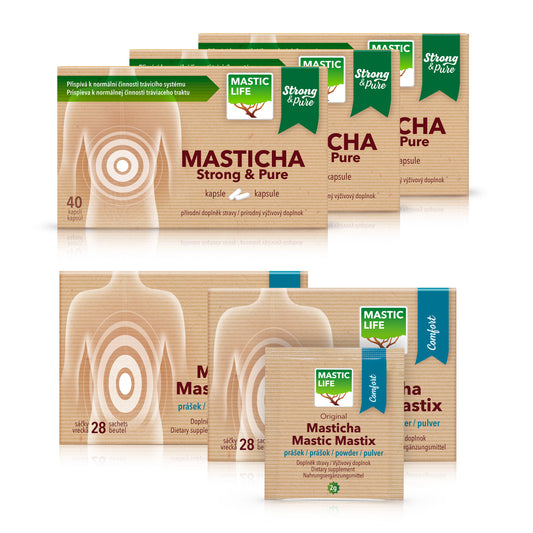 8-week treatment 🗓️
Mastic 8 weeks
Regular price £68.00 GBPRegular price£85.00 GBPSale price £68.00 GBPSale -
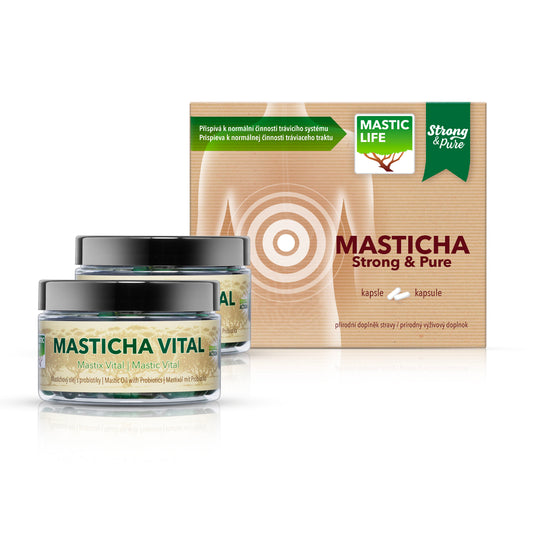 60-day treatment 💪
Mastic Gum Extra for 60 days
Regular price £114.00 GBPRegular price£143.00 GBPSale price £114.00 GBPSale -
 Gift set 🎁
Mastic „Life with Mastic"
Regular price £55.00 GBPRegular price£62.00 GBPSale price £55.00 GBPSale -
 Gift set 🌿
Mastic „Pure Mastic“
Regular price £28.00 GBPRegular price£30.00 GBPSale price £28.00 GBPSale

